
A New Era for Blue Carbon in Indonesia
Understanding the new Ministerial Regulation No. 17/2026
Indonesia has taken a major step towards unlocking the potential of its blue carbon ecosystems. With the issuance of Ministerial Regulation No. 17 of 2026, the country is establishing a clearer and more comprehensive regulatory framework for the development, certification and commercialization of blue carbon projects.
For project developers, investors and coastal communities, this represents a significant milestone in transforming Indonesia’s exceptional natural capital into long-term environmental, social and economic opportunities.

From regulatory uncertainty to a sector-specific framework
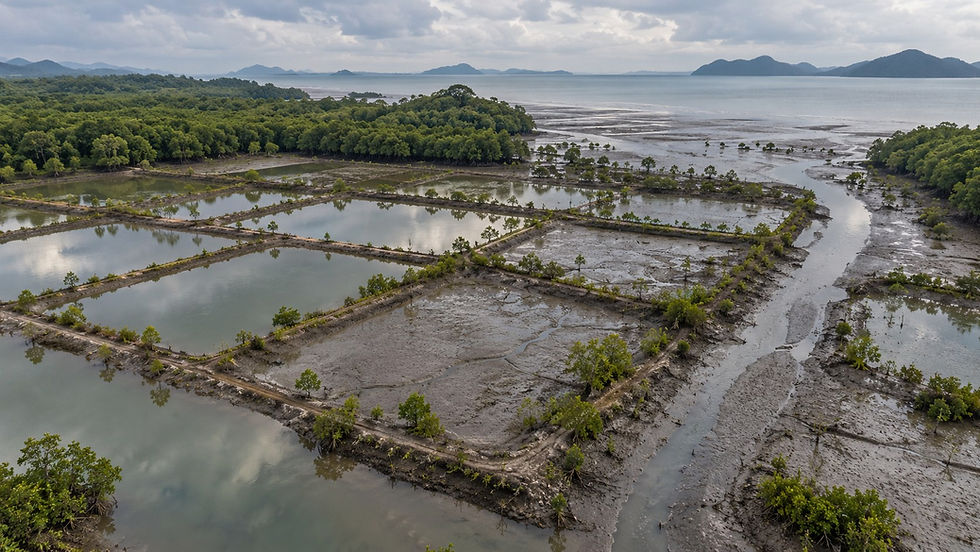
Indonesia is home to the world’s largest mangrove ecosystems, representing more than 20% of global mangrove coverage. Together with its seagrass meadows and extensive coastlines, these ecosystems give the country a central role in global blue carbon conservation and restoration.
Yet despite this potential, carbon projects have faced regulatory uncertainty, particularly around project authorization, land status, carbon accounting and international transactions.
Following a period of restrictions and regulatory transition, Presidential Regulation No. 110 of 2025 established a renewed national framework for carbon economic value instruments and greenhouse gas emission management. It clarified sectoral responsibilities and the role of the national carbon registry, while reshaping access to domestic and international carbon markets.
Against this backdrop, and following earlier sectoral developments in forestry, the Ministry of Marine Affairs and Fisheries (KKP) issued Ministerial Regulation No. 17 of 2026, which entered into force on 11 November 2026. This dedicated framework covers carbon economic value instruments in the marine and fisheries sectors, including relevant mangrove and seagrass activities.
For project developers, it provides a more coherent connection between project eligibility, licensing, community safeguards, carbon accounting and market access.
Six pillars shaping the new framework
1. Land status and project eligibility
The regulation provides a clearer basis for identifying eligible locations and the responsible authorities. It interacts with existing rules governing marine spatial use, non-forest land (APL) and areas within the forestry estate. For developers, establishing the legal status of each project area and the required approvals remains an essential first step.
2. Licensing and institutional oversight
A sector-specific pathway helps clarify the responsibilities of project developers and the public bodies supervising blue carbon activities. Business licensing, spatial conformity, environmental requirements and project-specific approvals must be considered together. This increases predictability, without removing the need to obtain individual authorizations.
3. Communities, consent and benefit-sharing
Community participation is a cornerstone of credible restoration. The framework reinforces the importance of meaningful engagement, Free, Prior and Informed Consent (FPIC), social safeguards and transparent benefit-sharing. The practical allocation of benefits must be consistent with the applicable rules and cooperation agreements, including how project costs and financing obligations are treated.
4. Registration and traceability through SRUK
The national Carbon Unit Registry System (SRUK) is intended to support traceability of carbon projects and units through registration and transactions. Better visibility over project location, accounting and credit status can strengthen transparency and help address double-counting risks, key considerations for buyers and investors.
5. Certification and international market access
The framework connects sectoral oversight with domestic carbon accounting and pathways involving recognized international standards. Validation, verification, issuance and cross-border transfers are subject to applicable national procedures; the need for governmental authorization or corresponding adjustments depends on the transaction and relevant rules.
6. Environmental integrity and long-term monitoring
Blue carbon projects need to demonstrate more than carbon removal. Monitoring, reporting, independent scrutiny and environmental and social safeguards are vital to assess restoration performance, ecosystem resilience, leakage and permanence, and to ensure that benefits extend to biodiversity and coastal livelihoods.
What changes for project developers?
The significance of this regulation goes beyond new administrative procedures. By bringing together institutional mandates, community participation, environmental safeguards, carbon accounting and market mechanisms, Indonesia is creating more predictable foundations for investment in high-integrity blue carbon projects.
Important implementation questions remain, notably the detailed interpretation of certain licensing and benefit-sharing provisions and the issuance of further technical guidance. The regulation should therefore be seen as a major enabling step, not an automatic authorization for every individual project.
For Apolownia and Blue Horizon, the timing is particularly meaningful. Following extensive project preparation and engagement with coastal communities and public institutions, the new framework brings greater clarity to the next stages of mangrove restoration in Indonesia.
Combined with the Letter of Intent signed with KKP at COP31, it represents a major institutional milestone on the road to implementation.
The opportunity now is to translate this progress into measurable restoration, durable community benefits and high-integrity climate action on the ground.
Further reading
Ministerial Regulation No. 17 of 2026 (Permen KP 17/2026) — Ministry of Marine Affairs and Fisheries (KKP).
Presidential Regulation No. 110 of 2025 — Indonesia’s framework for carbon economic value instruments.
KKP official COP31 announcement: https://www.kkp.go.id/news/news-detail/kkp-teken-pernyataan-bersama-pengembangan-karbon-biru-di-cop31-x2PJ.html


Comments