
Carbon revenues and coastal resilience: how benefit sharing works
A practical look at how blue carbon projects can turn carbon revenues into community priorities, with clear rules and accountable decisions.
Restoring mangroves changes a coastline. It can also change how people use land, earn a living and organise the management of shared resources. A high-quality blue carbon project has to address these changes from the beginning.
We have previously explained why local communities are central to lasting carbon projects. The next question is: how does the value generated by a project reach the people whose lives are connected to the ecosystem?
That is the purpose of a benefit-sharing mechanism. It defines who receives benefits, how they are calculated, when they become available, who decides how they are used and how those decisions can be checked.
Clear rules help build a relationship that benefits all parties and secures long-term support for the outcomes of restoration.
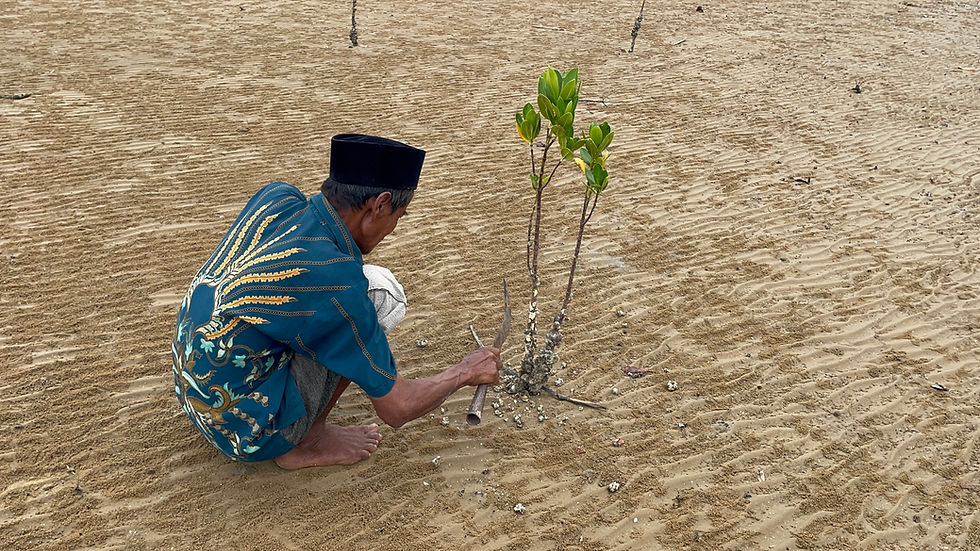
Start with the people and their rights
Before discussing revenue, a project needs to understand who uses the area and who holds rights over it. Formal ownership tells only part of that story. Customary rights, seasonal fishing, access routes and other livelihood activities also matter.
The people affected need a meaningful role in designing the mechanism. That requires understandable information, representative participation, time to consider proposals and access to independent advice where needed. Women, younger people and groups with less influence need practical opportunities to shape the discussion.
The High-Quality Blue Carbon Practitioners Guide places community participation, equitable agreements and informed decision-making at the heart of project quality.
A benefit-sharing agreement cannot resolve a rights dispute simply by offering money. The underlying rights and impacts must be addressed.
Explain what is being shared
A promise to share “a percentage of carbon revenues” leaves several questions unanswered:
Does the percentage apply to gross sales?
To proceeds after specified costs?
To credits allocated before they are sold?
When does the entitlement arise, and when does payment follow?
Different structures can work, but their implications need to be clear.
Mangrove restoration requires finance for ecological assessment, hydrological work, restoration and monitoring before carbon revenues may become available. How those costs and financing commitments are treated affects the amount available for distribution.
Under one possible model, agreed costs and financing payments are deducted before a remaining pool is shared. Another arrangement allocates communities a share of gross revenue. These structures expose communities to different risks, particularly if costs rise.
The public High-Quality Blue Carbon Guidance for Benefit-Sharing Agreements recommends clarifying these financial flows and incorporating community payments into financing negotiations from the outset.
Every deduction needs a defined purpose, an agreed calculation and evidence. Costs must also be tracked so the same expense is not counted twice.
Keep paid work and benefit sharing distinct
A project may employ local people in nurseries, restoration, monitoring or maintenance. Those jobs have value, and the work deserves fair payment.
A separate benefit-sharing mechanism gives participants an entitlement beyond their wages. Measures needed to protect people and the environment, together with any compensation for project impacts, must be funded separately from benefit sharing.
This distinction appears explicitly in Verra’s VCS Standard v5.0, which excludes workers’ salaries, necessary project infrastructure and safeguard mitigation measures from benefits counted under its benefit-sharing mechanism.
Rigorous accounting is therefore essential: it allows everyone to understand which obligations the project is meeting and which additional benefits it is distributing.
An example: from a carbon sale to a community decision
Imagine a mangrove restoration project involving several coastal villages. Before activities begin, participating rights holders and the developer agree on a mechanism linked to carbon sales.
They establish the eligible participants, the calculation, the permitted deductions, the distribution arrangements and the process for resolving disagreements.
A distribution cycle could then work as follows:
Stage | What happens |
Establish the proceeds | Sale records show the credits sold, the price obtained and the money received. Credits retained for other obligations are identified separately. |
Calculate the entitlement | The agreed rules determine the community allocation. Participants receive an explanation of the calculation. |
Allocate between communities | A previously agreed method accounts for relevant rights, contributions and impacts. Communities can question the underlying information. |
Choose a use | Through their agreed representative process, residents select a priority within the available budget. |
Deliver and report | Payments or purchases are documented, and residents can check what was delivered against their decision. |
In this example, one village chooses equipment for a community health facility. Another supports a shared livelihood initiative. Each decision includes responsibility for maintenance and ongoing costs.
The project team provides the financial information and practical support needed to implement those choices. Residents receive a record of spending and have an accessible route to report a missing delivery, disputed calculation or misuse of funds.
The benefit becomes tangible: a community can follow the money from the sale to a decision it helped make.
Make uncertainty understandable
A fixed share of carbon credits does not necessarily produce a fixed payment. Credit volumes, sale prices and payment dates can change. A signed purchase agreement, an issued credit and cash received are different stages.
Participants should understand these distinctions before entering an agreement. Financial explanations should show what happens under lower revenues or delays, including which payments are funded independently of carbon sales.
Accountability also needs to work when something goes wrong. A grievance process should allow people to raise concerns safely, receive a response and seek further review. The VCS v5.0 framework sets out requirements for accessible grievance handling and protection against retaliation.
Plan for the relationship to last
Restoration generates carbon rights and creates responsibilities that extend beyond the initial planting campaign. Benefit-sharing design should therefore address the duration of payments, future stewardship and changes in the organisations managing the project.
A project could establish a community fund or another arrangement for future needs. Any such choice requires agreement on who controls the funds, how they may be used and what happens if revenues fall or management changes.
For Apolownia, these questions belong alongside ecology, carbon measurement and financial structuring from the outset.
A credible mechanism connects a financial entitlement to meaningful decision-making and evidence of delivery. That gives communities a practical basis for assessing the project—and gives investors a clearer view of the relationship supporting long-term restoration.


Comments